 Last night, Monday September 30, was the fifth Monday of the month. On months with five Mondays, City Council meets in an open forum. There’s no agenda. People are invited to speak on any topic, with no time limit.
These fifth Mondays can represent the only time Council hears about some subjects from some people. They can also represent a chance for people to address current matters without the restrictions of time or an agenda.
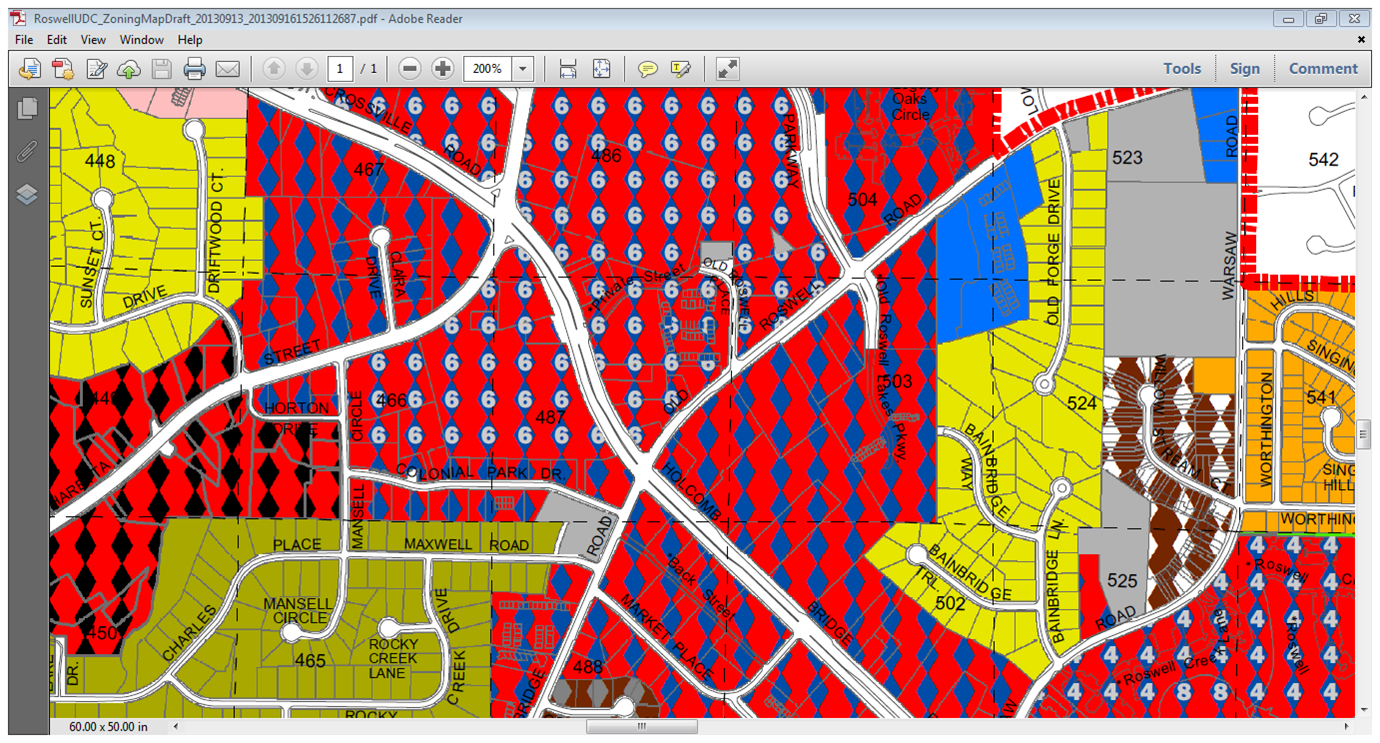
There were a lot of people there last night, and we heard about a range of topics. Most of the comments focused on the Unified Development Code (UDC), which is being created to address some of the weaknesses in our city’s current zoning code and to provide a “unified” tool.
My comments last night focused on the process by which the UDC is being created. I’m reproducing them here. Thank you to everyone who attended last night. It was a great example of community involvement in government, and it made me proud.
…
To the folks on the inside, the UDC process may have begun with adoption of the 2030 Comprehensive Plan, or the hiring of the consultant firm, or the formation of the UDC Committee in June of 2012. There have been many special work sessions, hearings, and other open-to-the-public meetings; however, the public really only came into the UDC picture in August of this year through a series of informational meetings held at different locations around Roswell. These meetings were open and held in a public setting, but I would not call them “community meetings.” They were informational meetings, and the public’s involvement in them was highly controlled and restricted, as there were no opportunities for general questions or discussion.
Throughout the process, the public has been “welcome” to provide input or to attend meetings. I remind you, though, that there is a huge difference between simply holding a meeting that is open to the public, and engaging in real outreach and truly welcoming open discussion and dialogue. This community engagement has not happened with the UDC.
We are being told that the public’s input is encouraged — but input on what? Another speaker tonight already stated that the UDC has changed so much since the July 28, 2013 draft that he might as well toss it out and just keep up with the document on his iPad. Changes are coming to the UDC fast. I’m not sure anyone – not staff, not council, and certainly not the average resident or business owner – can keep up. If you tell us to provide input but then can brush our comments and concerns aside by telling us over and over that it’s a draft, it’s a work-in-progress, then our input has no meaning. At what point do we get to see a document that we can actually evaluate? It’s hard to hit a moving target.
Here’s the rest of the path for the UDC:
Just in the past four days, we’ve seen a new draft document come online on Friday, and then an all-day Council work session occurred on Saturday, at which we can assume more changes were made. There’s a Council work session on October 14th. Then the Planning Commission meets on October 15th to provide their final recommendations – on what? The document that was just worked over the previous day?
The Council is slated to accept a draft of the UDC on October 28th, there is a first reading of the ordinance and map on November 13th. Then a second reading of the map and ordinance and adoption of the UDC on December 9th.
It’s not clear when changes are made, and how. The UDC is supposed to be a road map for Roswell’s future – how can you possibly create a strong, inclusive, and lasting document in this piecemeal fashion?
I have a suggestion. I’m not just here to complain. The process should slow. Down. I suggest a “notice and comment” period, similar to the approach the federal government utilizes in their rulemaking and regulation-writing process[1]. The process is fair and clear. Here’s how it works:
Generate a draft and freeze it for no fewer than 60 days. Ninety days would be better. During that time, actively gather public input on it. Hold workshops with different stakeholder groups – the Roswell Business Alliance, HOAs, neighborhoods, churches, professional and civic groups. Take public comment online and at real community meetings. The public comment period on the draft closes. Collect and organize the responses and publish them as a public document. Over a period of no fewer than 30 days, adjust and update the draft, addressing the substantive concerns that emerged during the comment period. Hold work sessions with council, the UDC Committee, staff, and boards and commissions. Invite the public, working through the people who offered comments during the open period. Then generate a final draft for approval.
We are on a very fast track to December 9th. It is unwise to adopt the UDC when there hasn’t been a full and thorough vetting of a final version. It can’t be passed if it’s tweaked up to the nth hour. When we don’t understand its ramifications and implications for our infrastructure and character. When the design standards aren’t available and won’t be until the spring – after the document is scheduled to be approved. This whole debacle reminds me of the Affordable Care Act, which had to be passed so we could find out what’s in it.
We must change our approach to ensure that the UDC serves the best interests of Roswell’s residents and small businesses. If it’s worth doing, it’s worth doing right.
Kendra Myers Cox
Candidate, Roswell City Council
[1] Say what you will about the federal government – it did just shut down, after all – but this community involvement and engagement model is something that the federal government does right.


 Kendra Myers Cox for Roswell